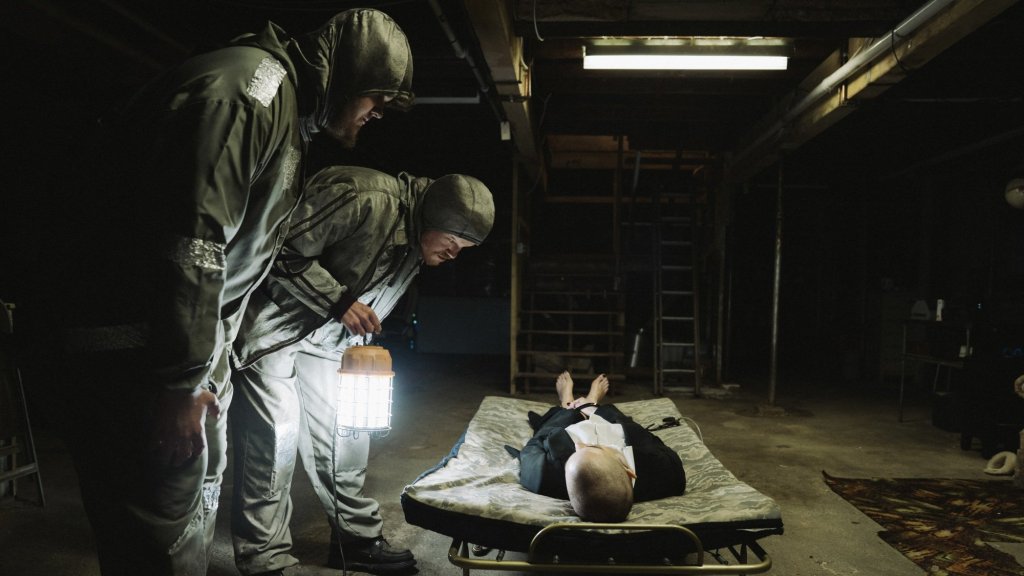
When I heard that Yorgos Lanthimos and Emma Stone were teaming up once again, I set my hopes high. Their previous three collaborations produced some of the most exciting and original cinema in recent years. Bugonia is no exception—though it’s arguably the most accessible film in Lanthimos’s portfolio. That doesn’t mean it isn’t excellent.
Aesthetically, Bugonia is unmistakably Lanthimos. He reunites with cinematographer Robbie Ryan (The Favourite, Poor Things) and composer Jerskin Fendrix (Poor Things, Kinds of Kindness). But once you look beyond the surface, the film starts to feel less like his typical work.
Lanthimos’s films tend to circle around certain recurring themes—at least in the ones I’ve seen. They often interrogate social rules and the illusion of free will. The Lobster forces its protagonist to find love or face harsh consequences. In Poor Things, Bella navigates the world free from social norms or shame, only to encounter men intent on shaping her into the woman they deem acceptable. Kinds of Kindness offers a triptych of stories about people being controlled and manipulated by those closest to them. Bugonia might brush against these ideas, but calling it a film “about control” feels like a stretch. Instead, it’s about humanity’s inevitable self-destruction—and the new life that emerges from death. The title itself refers to the ancient Greek belief that bees spontaneously arose from the carcasses of dead cattle.
It wasn’t until after seeing the film that I learned it wasn’t originally a Lanthimos project. Ari Aster had intended to create an English-language version of the 2003 South Korean film Save the Green Planet!, even recruiting the original director Jang Joon-hwan. When that fell through, Aster brought the idea to Lanthimos instead. Suddenly, it made sense why the film felt slightly unlike his usual work.On a practical level, the film is a blast. The pacing, the sharp editing, and the intensely physical performances from Stone and Jesse Plemons keep you locked onto the screen. Like Kinds of Kindness, it had me in hysterics while also deeply unsettled. Ryan brings back the signature wide, low angles that have become synonymous with Lanthimos’s visual language. These shots not only frame the characters and their environments beautifully but also instil a sense of helplessness that heightens the film’s unease. I also have to mention the incredible close-up shots of Stone’s character that have you questioning if she really is an alien or not. The majority of the film takes place inside two rooms of a house, with its windows covered, hiding the outside world. This could have easily felt claustrophobic; however, the huge score from Fredrix reminds us that this is just one part of a much bigger story. An epic that tells the story of the birth and death of the human race.
 L Gerrard Notes
Leave a comment